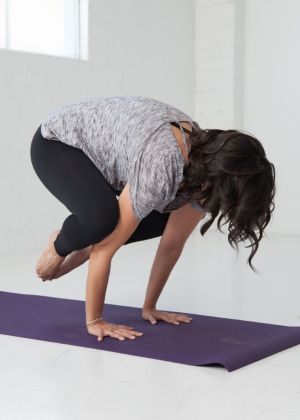
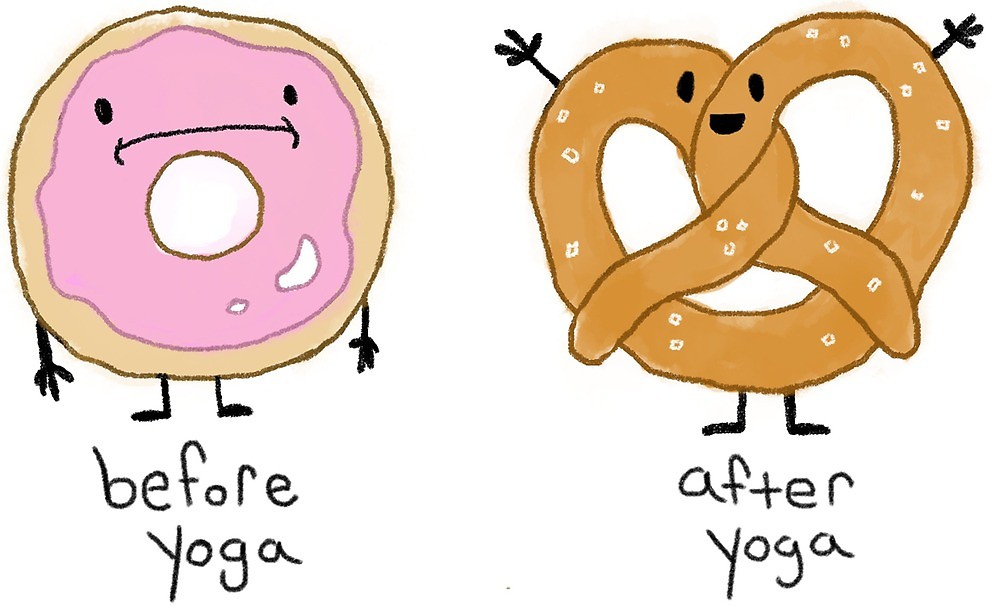
As yoga instructors, we regularly hear “I don’t like yoga. They always try to twist you into a pretzel.” (Insert eye roll or internal cringe here.) Well…sometimes we do. Twisting poses are an integral part of a well-rounded active practice.
Why should we twist? Our spine is meant to move through four planes of movement, one of which is rotation. Twists can promote a healthy range of motion, which may be compromised, due to a sedentary lifestyle, injury, degenerative conditions, or imbalances through sports or daily activity. Most of us always twist to the same side as you reach for something on a high shelf. Asanas that rotate the torso lengthen not only the larger muscles of the back, abdomen, and chest but also the smaller, deeper muscles including rotatores, multifidus, intercostals and the sternocleidomastoid. These motions can also help reduce back pain, increase circulation, aid digestion while de-stressing and centering the mind.
Poses that twist the body (parivrtta in Sanskrit) can be done seated, standing, lying down, and even inverted. Some of these require significant core strength and flexibility, but many are accessible for most students. Note: Always have students check with a medical professional if they have a spinal disc injury, significant back pain, sacroiliac issues, serious digestive conditions or are pregnant.
There are several key factors to executing twists safely and effectively, and as everything in yoga, it begins with the breath. To begin any twisting pose, start with a neutral spine and, as you inhale, lengthen the body from hips through the crown of the head. When you start to exhale, keep your hips in a neutral position and begin the rotation from the lumbar spine. Evenly move one vertebra at a time through the top of the head. As you hold the pose, feel the muscles begin to relax and see if there is more room to twist further. Inhale; lengthen your torso a little more. Exhale and twist more deeply. The cervical spine, for most people, is the most flexible part of the spinal column. Pay specific attention to this area to ensure that you don’t over rotate. Always practice twists on both sides then counter pose with an asana that brings the torso back to neutral alignment. Examples of such poses are mountain pose, chair, downward facing dog, monkey, and happy baby.
Making twists accessible for all body types and conditions is very important. Use of props can assist students to safely align many twisting poses. Blocks, bolsters, chairs and even a wall are useful to help participants keep a healthy posture during asanas.
Twists are an important part of a well-rounded yoga practice. Big or small, deep or shallow, supported or free, they can all aid in creating a healthier and more flexible back and help to improve several other physical conditions. So go ahead embrace your inner pretzel and begin reaping the benefits to your body, mind, and spirit.
Susan Bentley has been a yoga instructor at 24 Hour Fitness in Folsom, California for over ten years. She is YogaFit RYT-500 and C-IAYT certified. She is currently enrolled in the YogaFit Health Care 900-Hour Teacher Training track.