Have you ever been in a yoga class where you looked at the pose being demonstrated and thought, “Well…my body definitely doesn’t do that”?
Maybe the instructor offered one version, one alignment, one pace, and one definition of what the pose was supposed to look like. Everyone was expected to keep up, bend the same way, and somehow make their unique body fit into the practice.
At YogaFit, we believe it should work the other way around.
We make yoga fit the person. 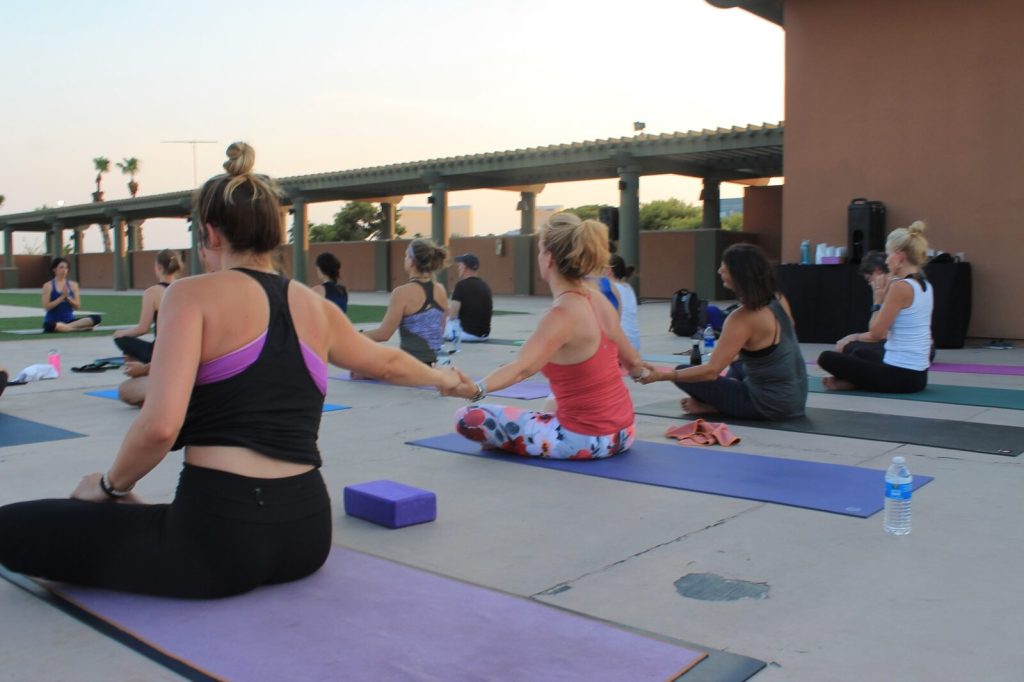
That simple idea is at the heart of YogaFit teacher training—and it is what makes us an open-system school of yoga education. Rather than preparing teachers to deliver one rigid sequence or teach poses in only one way, we give them the knowledge and practical tools to respond to the real people in front of them.
Why YogaFit Teacher Training Uses an Open-System Approach
A closed system assumes there is one correct way to teach and practice yoga:
“Here is the pose.”
“Here is exactly how it should look.”
“Follow this sequence.”
“Do it this way every time.”
That approach may appear organized, but it leaves very little room for real human beings.
People arrive in our classes with different bodies, energy levels, abilities, cultures, health histories, stress loads, and life experiences. They also arrive with different nervous systems and trauma histories. What feels grounding and supportive to one person may feel overwhelming or inaccessible to another.
An open system remains curious and responsive. Instead of forcing the student to adapt to the method, the teacher asks:
- Who is in front of me today?
- What is this student experiencing?
- What does their body and nervous system need?
- How can I preserve the purpose of the practice while offering meaningful choices?
- Is what I am teaching actually creating the response I intended?
The teacher observes, integrates the information, responds, and then reassesses.
Notice. Understand. Adapt. Repeat.
That is an open system—and that is how YogaFit teachers learn to teach.
We Give You a Framework, Not Just a Script
Anyone can memorize a sequence and repeat it. YogaFit prepares teachers to understand the “why” behind what they are teaching so they can make thoughtful decisions in real time.
You may begin class with a plan, but then discover that your students need more grounding, a slower transition, a different prop, a more accessible variation, or a completely different way of approaching the pose.
That does not mean your plan failed. It means you were paying attention.
A great YogaFit teacher is not simply delivering choreography. They are creating a conversation between the student, the practice, and the environment.
Our Five Key Elements give teachers a dependable foundation while still allowing the practice to remain flexible, creative, and responsive.
The Five Key Elements: Our Foundation for an Open System
1. The YogaFit Essence
The YogaFit Essence invites us to breathe, feel, listen to the body, stay present, and let go of competition, judgment, and expectations.
This is where the open system begins—with awareness.
Instead of telling students to override their sensations or push toward an external ideal, we encourage them to notice what is happening inside. The student’s experience becomes valuable information.
This changes the question from “Does my pose look right?” to “What am I noticing, and is this choice right for me today?”
That is a powerful shift for both personal practice and teaching.
2. The Seven Principles of Alignment
YogaFit’s Seven Principles of Alignment give teachers a safety-focused framework grounded in anatomy and exercise science. They help us understand how the body organizes itself through foundations, dynamic tension, core stability, spinal alignment, and safe movement through the joints.
These principles give us direction without forcing every body into an identical shape.
We are not measuring one student’s pose against another student’s pose. We are using sound principles to help each person find an expression that is safe, stable, purposeful, and appropriate for their body.
The principles stay consistent. Their application remains adaptable.
3. The Three-Mountain Format
The Three-Mountain Format provides the structure for a balanced YogaFit class through a warm-up, heat-building and working phase, and cool-down.
The structure gives teachers a map, but it does not dictate every step of the journey.
The length, intensity, pose choices, pace, and focus of each mountain can change based on the students and the setting. A class for athletes may climb those mountains differently than a class for active older adults, children, people recovering from trauma, or students managing chronic pain.
We keep the architecture while adapting what happens inside it.
4. Transformational Language
Words are part of the practice, and they affect the nervous system.
YogaFit’s Transformational Language helps teachers communicate in ways that are positive, empowering, inclusive, and participant-centered. We use language that offers possibilities instead of demands and encourages curiosity rather than criticism.
Students are invited to explore, notice, choose, and adjust.
This language does more than make a class sound friendly. It helps create autonomy and emotional safety. It reminds students that they are the experts on their own bodies and that choosing a different option is not failing—it is practicing awareness.
5. Foundational Poses
YogaFit’s Foundational Poses give teachers a practical and versatile movement vocabulary. They offer a starting point from which classes can be built, adapted, expanded, or simplified.
These poses are tools, not rigid end points.
Teachers learn how to modify the base, shorten a lever, adjust the range of motion, use a prop, change the pace, or select a different pose that offers a similar benefit.
The goal is never to make every student’s pose look the same. The goal is to help each student create an experience that is safe, meaningful, and effective.
Trauma Awareness Is Built Into Our Foundation
YogaFit is a trauma-aware school—not only within our YogaFit for Warriors and trauma-specialty programs, but throughout the way we prepare teachers.
Being trauma-aware does not mean assuming that everyone is fragile or asking students to disclose their personal histories. It means recognizing that we may never know what someone has experienced—and teaching in a way that offers dignity, predictability, choice, and respect to everyone.
Our foundational approach supports this through:
- Invitational and empowering language
- Meaningful choices and options
- Freedom from competition and judgment
- Respect for personal boundaries
- Awareness of nervous-system responses
- Predictable class organization
- Encouragement to listen to internal cues
- Permission to pause, rest, or choose differently
- A focus on function and experience rather than performance
These are not “extras” that we add only when we know someone has experienced trauma. They are simply good teaching practices.
A student should not have to share their story before they are offered choice and respect.
Why an Open System Is More Therapeutic
Human beings are always changing. Sleep, stress, pain, illness, injury, medication, relationships, work, environment, and life events can all influence how someone experiences yoga on a particular day.
That means what worked last week may not be what is needed today.
A closed approach may continue teaching the same practice because that is what was planned. An open approach pays attention to the response and adjusts the input.
That responsiveness makes the practice more therapeutic. It allows us to find an appropriate balance between challenge and support, effort and ease, structure and freedom.
It also helps students develop skills that extend far beyond the yoga mat: self-awareness, discernment, adaptability, confidence, nervous-system literacy, and trust in themselves.
This Is What Makes YogaFit Different
Since 1997, YogaFit has continued to evolve by bringing together the wisdom of Eastern yoga traditions with Western knowledge from anatomy, exercise science, neuroscience, psychology, and trauma-informed education.
We stay rooted in yoga while remaining open to new research, new voices, new populations, and new ways of making yoga more accessible and effective.
Find the Yoga Teacher Training That Fits You
Yoga should never require people to force their bodies, experiences, or needs into a predetermined mold. The practice—and the teacher—should be able to meet students where they are.
That is what YogaFit teacher training prepares you to do.
You will leave with more than a sequence to memorize or a script designed for one type of student. You will gain a strong foundation, practical teaching tools, an understanding of why they work, and the confidence to adapt them for the people in front of you.
Whether you are brand-new to yoga, ready to become a teacher, adding yoga to an existing profession, or returning to deepen your education, there is a place for you at YogaFit.
Bring your questions. Bring your experiences. Bring the body and life you have today.
We will help you build a yoga practice—and a path forward—that fits.
Ready to Begin Your YogaFit Teacher Training?
Discover how YogaFit’s flexible, inclusive, and trauma-aware approach can help you become a knowledgeable and confident yoga teacher. Begin with YogaFit Level One, or explore our complete teacher training programs to find the path that fits your interests, schedule, and goals.